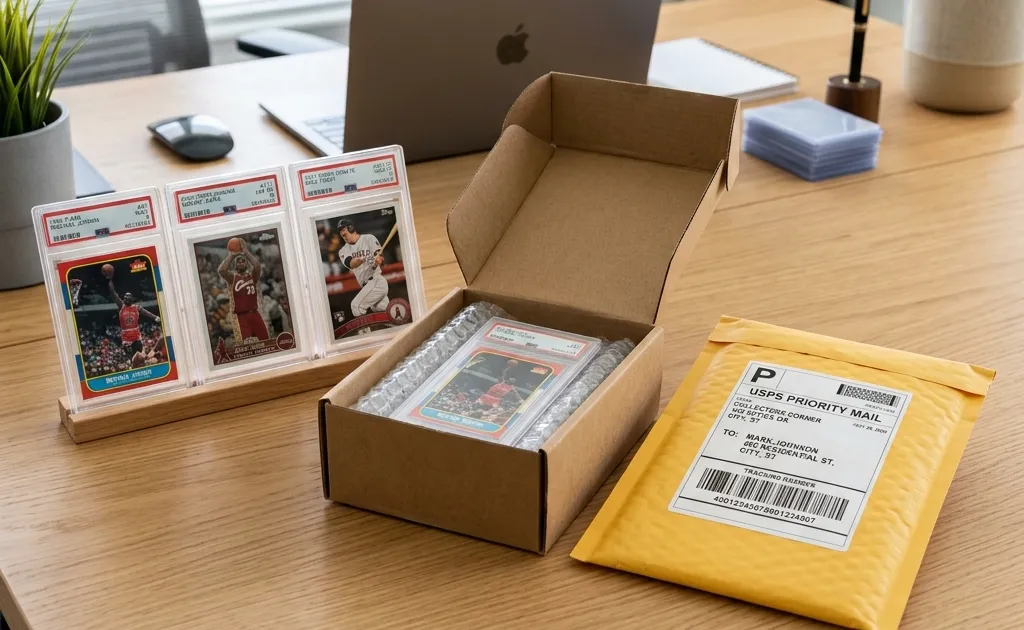
Whether you are looking to trim down your personal collection, clean out a closet of childhood memories, or actively run a card-flipping business, knowing how to sell sports cards is essential to maximize your returns.
The sports card market is highly liquid, but different selling channels yield very different net payouts. If you sell to the wrong place or use poor listing habits, you could leave hundreds of dollars on the table.
In this guide, we will compare the top selling platforms, walk through listing best practices, and teach you how to ship your cards safely to avoid disputes.
1. Where to Sell Sports Cards: Comparing Your Options
There is no single “best” way to sell sports cards. The right platform depends on your card’s value, how quickly you need cash, and how much effort you want to invest.
eBay (Best for Individual High-Value Cards)
eBay is the largest sports card marketplace in the world. It gives you access to millions of active buyers, helping you get the closest price to actual market value.
- Fees: Around 13.25% + $0.30 per sold item.
- Pros: Maximize value; quick sales for popular players.
- Cons: Requires photography, listing, customer service, and packing. Potential for buyer disputes.
Local Card Shops (LCS) (Best for Quick Cash)
If you walk into a local brick-and-mortar hobby shop, they will inspect your cards and make an offer on the spot.
- Payout: Typically 50% to 70% of recent eBay completed comps.
- Pros: Instant cash; zero shipping effort; safe transactions.
- Cons: You must accept a significant discount since the shop needs to resell the cards for a profit.
Consignment Services (COMC, eBay Consignors) (Best for Large Volumes)
Consignment services allow you to ship a box of cards to a third-party company. They will scan, describe, list, and ship the cards for you.
- Fees: Typically a flat fee per card ($0.50–$1.00) plus a percentage of the final sale price.
- Pros: Hands-off; ideal for selling hundreds of mid-tier cards.
- Cons: Slower payouts; fees eat into low-value cards.
Card Shows & In-Person Trading (Best for Community)
Renting a table at a local card show or walking the floor with a trade box is a great way to sell directly to other collectors without platform fees.
- Pros: Cash in hand; no seller fees; network with other collectors.
- Cons: Requires time and travel; buyers will negotiate heavily.
2. Listing Best Practices to Maximize Profit
If you choose to sell cards yourself on platforms like eBay, Facebook Groups, or Twitter/X, follow these optimization tips:
- Take High-Quality Scans or Photos: Take photos on a clean, neutral background under bright, indirect light. Show the front and back clearly. Crop out empty space. Highlight any scratches or soft corners to build trust with buyers.
- Write Keyword-Rich Titles: Optimize your titles for search. Include the Year, Set Name, Player Name, Card Number, and Parallels/Attributes (e.g., “2020 Panini Prizm Justin Herbert Rookie RC #327 Silver Prizm”).
- Use eBay’s “Standard Envelope”: For raw cards under $20, use eBay Standard Envelope shipping. It costs the same as a letter stamp but includes basic tracking, making it cheap and safe for low-value transactions.
3. Shipping Safely: The “Sandwich” Method
Nothing is worse than a card getting damaged during shipping, resulting in a forced refund and a ruined card. Always package your cards using the industry-standard sandwich method:
- Sleeve and Topload: Place the card in a penny sleeve, then a toploader.
- Tape the Top: Place a piece of painter’s tape (or a sticky tab) over the opening of the toploader. This prevents the card from sliding out in transit. Never use scotch tape, as it leaves sticky residue on the holder and card.
- Cardboard Sandwich: Place the toploadered card between two pieces of rigid cardboard and tape the sides. This prevents the card from bending if the mailer gets squeezed.
- Bubble Mailer: Slide the cardboard sandwich into a padded bubble mailer. Send it with tracking (USPS First Class or equivalent).
The Secret Weapon for Sports Card Sellers
Before listing any cards for sale, you must know their exact current market value to avoid underpricing your items or wasting time with unrealistic listings.
The Sports Card Scanner & Value app is the ultimate seller’s tool:
- Instant Valuation: Scan a card to instantly pull recent eBay sold comps and graded price data.
- Parallel Verification: Make sure you aren’t listing a rare parallel as a cheap base card.
- Collection Inventory: Track what you have in inventory, set custom prices, and monitor your total portfolio value as you buy and sell.
Download the Sports Card Scanner & Value app on the App Store or Google Play Store to streamline your sales workflow today!
Get Instant Sports Card Values
Download the Sports Card Scanner & Value app to instantly identify, catalog, and track your baseball, basketball, and football cards using your phone camera.