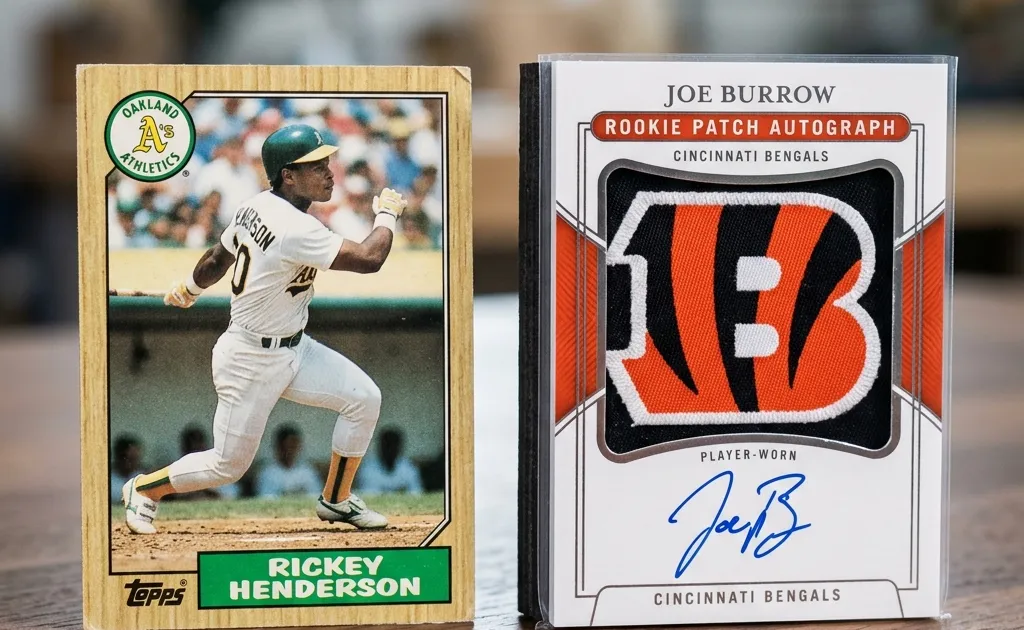
If you have ever purchased a pack of modern sports cards, you have probably noticed that they aren’t all made the same. While a standard base card is thin and flexible, autograph cards, memorabilia cards, and patch cards can be thick, heavy, and rigid.
When you go to buy protective toploaders or magnetic one-touch cases, you will see them categorized by “point size” (written as pt), such as 35pt, 55pt, 75pt, 100pt, 130pt, and 180pt.
If you buy a holder that is too small, you risk crushing your card’s corners and scratching the surface. If you buy one that is too large, the card will slide around inside, causing edge wear and chipping.
In this guide, we will explain what “points” mean, provide a simple conversion chart, and teach you how to measure your cards to choose the perfect fit.
What Does “Point” (pt) Mean in Sports Cards?
In the printing and paper industry, a “point” is a unit of measurement equal to 1/1000th of an inch (0.001 inches).
Therefore:
- A 35pt card is 0.035 inches thick.
- A 130pt card is 0.130 inches thick.
- A 360pt card is 0.360 inches thick (almost a third of an inch!).
The Card Thickness Sizing Chart
Here is a quick reference guide comparing point sizes to standard card types you will encounter in the hobby:
| Card Thickness (pt) | Standard Sports Card Types |
|---|---|
| 35pt | Standard base cards, chrome cards, and thin inserts (Topps Series 1, Panini Prizm base). |
| 55pt | Thicker chrome cards, heritage cardboard cards, and light inserts (Bowman Chrome, Topps Allen & Ginter). |
| 75pt | Thin jersey cards, autograph cards, and acetate cards. |
| 100pt | Standard jersey, relic, and memorabilia cards. |
| 130pt | Thick patch cards, autograph relics, and manufactured relics (Panini National Treasures, Topps Triple Threads). |
| 180pt | Extra-thick patch cards and booklet cards. |
| 360pt | Super-thick premium relics (sneaker patches, thick batting glove relics). |
How to Measure Your Card Thickness
If you don’t know the exact point size of your card, you can easily measure it using one of two simple methods.
Method 1: The Penny Test
If you don’t have a ruler or caliper, you can use standard U.S. copper pennies to estimate thickness. Pennies are consistently about 59pt (0.059 inches) thick.
Stack pennies next to your card on a flat surface:
- 1 Penny $\approx$ 55pt to 75pt card.
- 2 Pennies $\approx$ 100pt to 120pt card.
- 3 Pennies $\approx$ 180pt card.
- 4 Pennies $\approx$ 240pt card.
Always round up! If your card is slightly thicker than 2 pennies, choose a 130pt holder rather than a 100pt holder to prevent compression damage.
Method 2: Use a Printable Thickness Gauge
Most top-loader manufacturers (like Ultra PRO or BCW) offer a free printable PDF card thickness gauge.
- Print the gauge out at 100% scale (do not select “Fit to Page”).
- Place the bottom-left corner of your card against the designated lines on the paper.
- See which block thickness matches the side profile of your card.
Toploader & Sleeve Sizing Tips
- Always Sleeve First: Even for thick cards, always put the card in a penny sleeve before placing it in a toploader. Ensure you buy “thick card sleeves” (designed for 100pt+ cards) so you don’t force a standard sleeve over a thick card.
- Magnetic One-Touch Cases: Magnetic holders have zero flex. It is crucial to get the exact point size. If you place a 130pt patch card into a 100pt magnetic holder, snapping it shut will crease the card or ruin the patch border.
- Storage Box Sizing: Keep in mind that 130pt+ toploaders are wider and taller than standard 35pt toploaders. If you have a large number of thick cards, make sure your cardboard storage boxes are wide enough to fit “thick card” holders.
Keep Track of Your Collections and Sizes
Sorting cards by thickness and point size is just one part of maintaining an organized inventory.
Instead of guessing sizes or manually cataloging card specifications in spreadsheets, use the Sports Card Scanner & Value app.
The app’s scanning AI automatically identifies the exact release, set, and parallel variation of your card, which helps you quickly determine if a card is a standard thin base card or a thick premium insert. Organize your cards into custom binders based on their size and storage needs, and keep their live market values tracked automatically.
Download the Sports Card Scanner & Value app today on the App Store or Google Play Store!
Get Instant Sports Card Values
Download the Sports Card Scanner & Value app to instantly identify, catalog, and track your baseball, basketball, and football cards using your phone camera.